



Comparison and contrast of direct vs indirect adhesive restorations in the anterior region.
This webinar involves the selection of possible treatment protocols for anterior aesthetic adhesive restorations: direct composite or indirect ceramics. The treatment plan will be based on patient age, patient preferences and expectations, economic limitations, sound scientific principles and treatment philosophy of the operator. Example cases involve diastema closure, restoration of fractured anterior teeth, masking discolored teeth, and re-treatment of previously restored teeth.
Composite and ceramics are the materials of choice to make invisible tooth-colored restorations in the anterior region.
In recent years new nano-filled and nano-hybrid composite materials with simplified shade system, able to mimic to natural tooth, were introduced onto the dental market. Regarding ceramics, improved leucite reinforced and lithium disilicate glass ceramics in combination with CAD/CAM technology are available.
Direct composite restorations are, in general, less invasive. When changing tooth form, e.g. closing diastema, no preparation is required. These restorations are preferred in young patients when tooth position and the gingival level are not yet stable. The cost of direct restorations is lower compared to indirect restorations and -if correctly placed and regularly maintained- these restorations perform well over a period of 10 years and longer.
Indirect veneers give the most optimal more durable esthetic result. With the currently available CAD/CAM materials and precise milling machines, minimally invasive natural looking restorations can be performed in a predictable way.
The different aspects described above and the protocols to obtain durable direct composite and indirect ceramic adhesive restorations in the anterior region will be discussed in this webinar.
Learning objective 1: How to mimic natural teeth in the anterior region with an adhesive restoration.
Learning objective 2: Criteria for selection of direct or indirect adhesive restoration.
Learning objective 3: Protocol for direct composite restorations.
Learning objective 4: Protocol for indirect adhesive ceramic restorations.
Learning objective 5: Prognosis of direct composites and indirect ceramic adhesive restorations.
Speakers
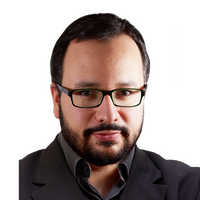
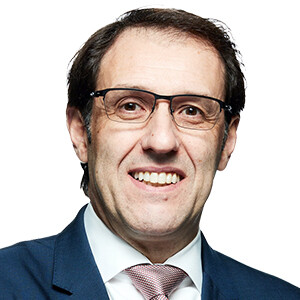
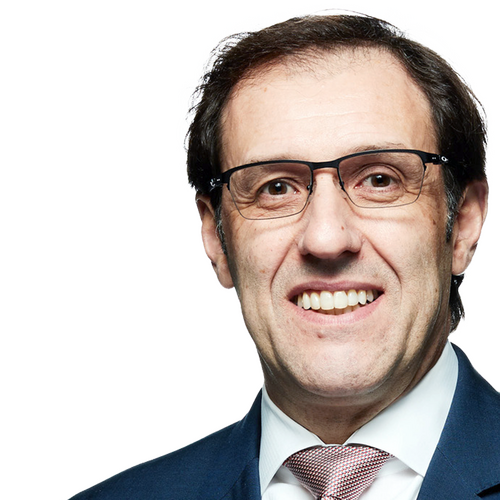
Dr. Javier Tapia Guadix D.D.S., CGI Artist
More courses with Dr. Javier Tapia GuadixJavier Tapia Guadix was born in 1978 in Madrid, Spain. He finished dental school at the European University of Madrid in 2003. Working then as associate professor in the prosthetics department in 2004.
In 2005 he started his career as professional computer graphics artist, focused on illustration, animation and application development. He founded the company Juice – Dental Media Design for this purpose. He received the Collegiate Merit Award by the Spanish College of Dentists from the 1st Region in 2005, for his collaboration in the commission of new technologies. In 2011 he founded together with Panaghiotis Bazos and Gianfranco Politano the Bio-Emulation group. He actively collaborates with several universities across Europe and is member of GC Restorative Advisory Board. Javier works in his private practice in Madrid, focused on restorative dentistry and esthetics. He is an international lecturer with participation in numerous congress, hands-on courses and live courses. He published several articles in restorative dentistry, dental photography and computers in dentistry.
Prof. Marleen Peumans
More courses with Prof. Marleen PeumansMarleen Peumans was born on November 10, 1964, in Belgium. She obtained her degree in Dentistry in 1987 at the Catholic University of Leuven. Thereafter, she followed a 4-year post-graduate program at the Department of Operative Dentistry. She applied herself especially to the clinical use and the performance of anterior and posterior resin composites, bonded ceramic restorations, fibre-reinforced composite restorations and bleaching. She took part in numerous clinical studies concerning dentine adhesives, posterior composites, and ceramic veneers/inlays/onlays. In 1997 she obtained the degree of Doctor in Medical Sciences. From 2004 she became Professor at the Catholic University of Leuven. She has several national and international publications on her name concerning clinical performance of adhesive restorations and bleaching. She is a member of the Bio-Emulation team.